
Beef Yakiniku is a delightful Japanese dish that offers a burst of flavor and tenderness in every bite. This quick-cooking beef recipe is perfect for weeknight dinners or special occasions, making it a versatile addition to your culinary repertoire. With its savory marinade and perfectly seared slices of steak, Beef Yakiniku stands out as a crowd-pleaser that will leave everyone asking for seconds.
Why You’ll Love This Recipe
- Quick Cooking: This recipe takes only 10 minutes from start to finish, making it ideal for busy weeknights.
- Rich Flavor: The marinade combines soy sauce, gochujang, and sesame oil, delivering a deliciously complex taste that enhances the beef.
- Customizable: Feel free to add your favorite vegetables or adjust the spice level to suit your taste.
- Perfect for Sharing: Beef Yakiniku is meant to be enjoyed with family and friends, creating a warm dining experience.
- Healthy Ingredients: Packed with protein and fresh veggies, this dish can fit into various healthy eating plans.
Tools and Preparation
To prepare Beef Yakiniku efficiently, you’ll need some essential tools that will streamline the cooking process.
Essential Tools and Equipment
- Wok
- Mixing bowl
- Whisk
- Serving bowl
Importance of Each Tool
- Wok: A wok cooks beef evenly at high heat, ensuring a great sear and flavorful caramelization.
- Mixing bowl: A large bowl allows you to mix the marinade thoroughly and coat the beef well.
Ingredients
For the Steak
- 750 g (1.65 lbs) flank or skirt steak, very thinly sliced against the grain
For the Marinade
- 80 ml (⅓ cup) low-sodium light soy sauce
- ½ tbsp gochujang (Korean red chili paste)
- 1 tbsp mirin
- 2 tsp minced ginger
- ½ tsp garlic powder or 1 tsp garlic paste
- 1 tbsp sesame oil
- 1 tbsp neutral oil (e.g., avocado or rapeseed)
- 4 tbsp light brown sugar
To Serve
- Sesame seeds
- Boiled rice
- Chopped cucumber and tomato
How to Make Beef Yakiniku
Step 1: Prepare the Marinade
In a large mixing bowl, whisk together the soy sauce, gochujang, mirin, ginger, garlic powder or paste, sesame oil, neutral oil, and brown sugar. Ensure all ingredients are combined well.
Step 2: Marinate the Steak
Add the thinly sliced beef to the marinade. Mix thoroughly to coat all pieces evenly. Cover the bowl with plastic wrap and refrigerate for 2 hours for maximum flavor infusion.
Step 3: Preheat the Pan
Warm a serving bowl in an oven set to low heat to keep your cooked beef warm. Meanwhile, heat your wok over very high heat until it starts smoking—this is crucial for achieving that perfect sear.
Step 4: Cook the Steak
Cook in two batches for even results. Add half of the marinated beef to the hot wok, spreading it into a single layer. Allow it to sear undisturbed for about 3 minutes until caramelized. Stir and cook another 2–3 minutes until browned and slightly crispy. Transfer this batch to your warm serving bowl, then repeat with the remaining beef.
Step 5: Garnish and Serve
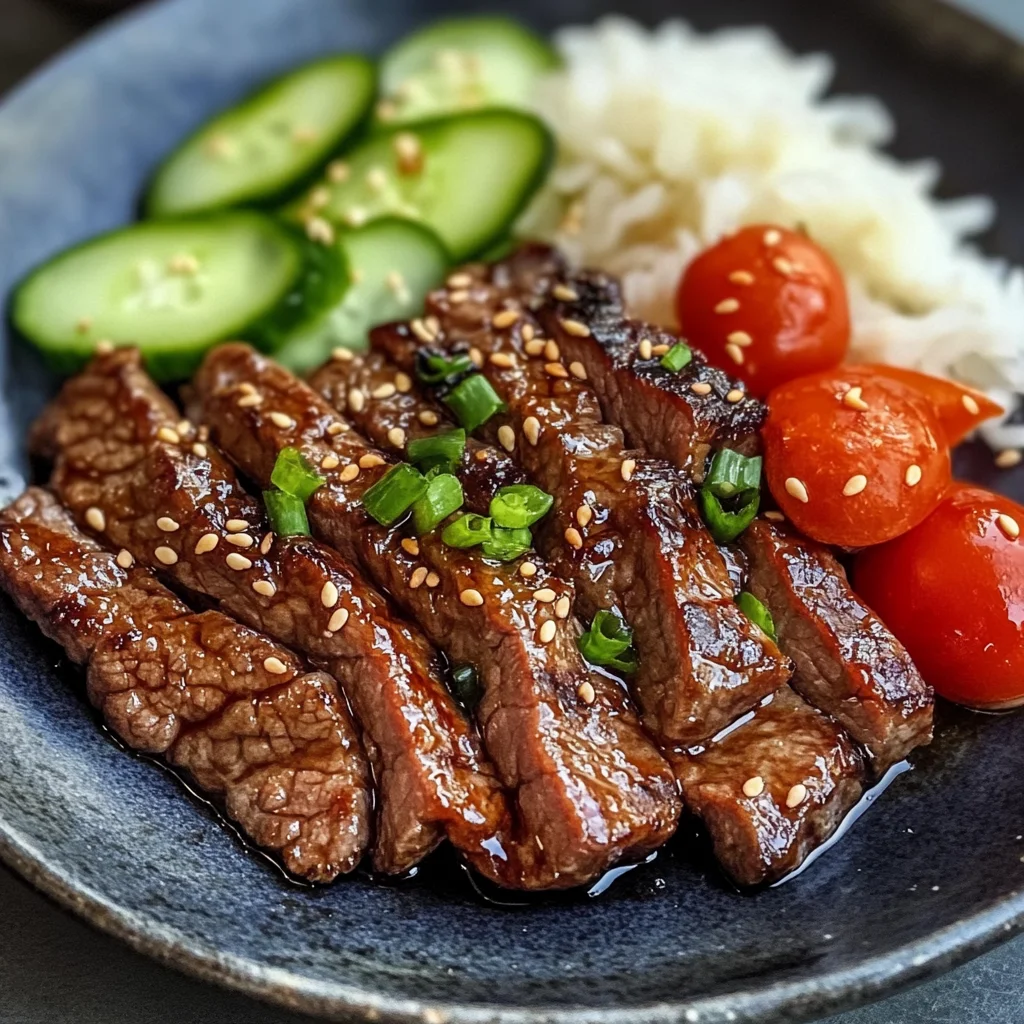
Sprinkle sesame seeds over your cooked Beef Yakiniku and serve immediately alongside boiled rice. Add chopped cucumber and tomato on the side for freshness. Enjoy!
How to Serve Beef Yakiniku
Beef Yakiniku is a delightful dish that bursts with flavor and texture. Serving it correctly can elevate your dining experience, making it even more enjoyable for you and your guests.
With Boiled Rice
- A simple yet perfect pairing, boiled rice absorbs the savory flavors of the beef, creating a comforting meal.
Fresh Vegetables
- Add chopped cucumber and tomato on the side. Their crunchiness provides freshness that balances the richness of the beef.
Sesame Seeds Garnish
- Sprinkling sesame seeds over the cooked beef adds a nutty flavor and a lovely visual appeal to your dish.
Asian Slaw
- Serve with a side of Asian slaw for an extra crunch. The tanginess of the dressing complements the savory notes of Beef Yakiniku well.
Lettuce Wraps
- Use large lettuce leaves to wrap pieces of beef for a fun and low-carb alternative. This method adds freshness and makes for easy eating.
Kimchi
- A traditional accompaniment, kimchi’s spicy and tangy flavors enhance the overall meal experience while adding probiotic benefits.
How to Perfect Beef Yakiniku
Achieving perfection with Beef Yakiniku relies on a few key techniques. Here are some tips to elevate your dish:
- Use high-quality beef: Selecting fresh, well-marbled flank or skirt steak will ensure tenderness and rich flavor in every bite.
- Slice against the grain: Thinly slicing the meat against the grain helps to break down tough fibers, resulting in a more tender finish.
- Marinate longer if possible: While 2 hours is sufficient, marinating overnight enhances flavor absorption, making your beef even more delicious.
- Preheat your cooking surface: Getting your wok or pan smoking hot ensures that the beef sears quickly, locking in juices and creating that coveted caramelized crust.
- Cook in batches: Avoid overcrowding the pan; cooking in smaller batches allows for better heat distribution and prevents steaming.
Best Side Dishes for Beef Yakiniku
To create a well-rounded meal with your Beef Yakiniku, consider these complementary side dishes:
- Miso Soup: A warm bowl of miso soup adds depth to your meal and pairs beautifully with the flavors of beef.
- Steamed Edamame: Lightly salted edamame pods offer protein and fiber while being an easy-to-prepare snack or starter.
- Pickled Vegetables: Tangy pickles provide acidity that cuts through the richness of the beef, enhancing overall balance on your plate.
- Rice Paper Rolls: Fill rice paper rolls with fresh herbs, vegetables, and shrimp or tofu for a light and refreshing addition to your meal.
- Sushi Rolls: Offering sushi rolls as an appetizer adds an elegant touch to your dinner spread and complements the Japanese theme.
- Grilled Asparagus: Lightly charred asparagus drizzled with soy sauce makes a deliciously vibrant side dish that pairs wonderfully with grilled meats.
Common Mistakes to Avoid
Cooking Beef Yakiniku can be simple, but a few mistakes can ruin your dish. Here are some common pitfalls to watch out for.
- Bold Marinade Mistake: Not allowing the beef to marinate long enough can result in bland flavors. Always marinate for at least 2 hours to ensure the meat absorbs the flavors deeply.
- Bold Cooking Temperature Error: Using low heat can lead to uneven cooking and a lack of that delicious caramelization. Make sure your wok is smoking hot before adding the beef.
- Bold Overcrowding the Pan: Adding too much beef at once can lower the pan’s temperature and cause steaming instead of searing. Cook in batches for a better texture.
- Bold Skipping the Resting Time: Failing to let the meat rest before serving can make it tough. Allowing it to sit for a couple of minutes helps retain its juices.
- Bold Ignoring Garnishes: Neglecting toppings like sesame seeds or fresh vegetables misses an opportunity for flavor and presentation. Always finish your dish with these garnishes.
Storage & Reheating Instructions
Refrigerator Storage
- Store leftovers in an airtight container.
- Beef Yakiniku can be kept in the fridge for up to 3 days.
Freezing Beef Yakiniku
- Place cooled Beef Yakiniku in freezer-safe bags or containers.
- It will retain quality for up to 3 months in the freezer.
Reheating Beef Yakiniku
- Bold Oven: Preheat your oven to 350°F (175°C) and reheat beef on a baking tray until warmed through, about 10 minutes.
- Bold Microwave: Place the beef in a microwave-safe dish, cover, and heat in short intervals, stirring occasionally, until hot.
- Bold Stovetop: Heat a pan over medium heat and rewarm the beef for several minutes, stirring gently until heated.
Frequently Asked Questions
Here are some commonly asked questions about Beef Yakiniku that might help you enhance your cooking experience.
What is Beef Yakiniku?
Beef Yakiniku is a Japanese grilled beef dish that features thinly sliced marinated steak cooked quickly at high temperatures. It’s often served with rice and fresh vegetables.
How do I choose the right cut of beef for Beef Yakiniku?
Flank or skirt steak is ideal due to its tenderness when sliced thinly against the grain. These cuts absorb marinades well and cook quickly.
Can I customize my Beef Yakiniku marinade?
Absolutely! You can adjust ingredients like soy sauce or add more spice by increasing gochujang or including other seasonings according to your taste preferences.
How should I serve Beef Yakiniku?
Serve it hot with boiled rice and fresh vegetables like cucumber and tomato. Don’t forget to sprinkle sesame seeds on top for added flavor!
Final Thoughts
Beef Yakiniku is not only delightful but also versatile. You can easily customize it with different marinades or side dishes. Give this recipe a try; you might just find it becomes a favorite in your home!
Beef Yakiniku
Beef Yakiniku is a delectable Japanese dish that brings together thinly sliced, marinated beef and vibrant flavors in just 10 minutes. Ideal for busy weeknights or special gatherings, this quick-cooking recipe showcases tender steak infused with a savory marinade of soy sauce, gochujang, and sesame oil. The result is a mouthwatering stir-fry that can be customized with your favorite vegetables and served alongside rice for a satisfying meal. Whether you’re entertaining guests or enjoying a cozy dinner at home, Beef Yakiniku is sure to impress and leave everyone craving more!
- Prep Time: 10 minutes
- Cook Time: 10 minutes
- Total Time: 20 minutes
- Yield: Serves approximately 4
- Category: Main
- Method: Frying
- Cuisine: Japanese
Ingredients
- 750 g flank or skirt steak (thinly sliced against the grain)
- 80 ml low-sodium light soy sauce
- ½ tbsp gochujang
- 1 tbsp mirin
- 2 tsp minced ginger
- 1 tbsp sesame oil
- 4 tbsp light brown sugar
Instructions
- In a large mixing bowl, whisk together soy sauce, gochujang, mirin, minced ginger, sesame oil, and brown sugar until combined.
- Add the sliced beef to the marinade and mix thoroughly. Cover and refrigerate for at least 2 hours.
- Preheat your wok over high heat until smoking hot.
- Cook the marinated beef in two batches for about 3 minutes per side until caramelized and slightly crispy. Transfer to a warm serving bowl after each batch.
- Serve immediately with boiled rice and garnish with sesame seeds.
Nutrition
- Serving Size: 200 g
- Calories: 340
- Sugar: 12 g
- Sodium: 780 mg
- Fat: 18 g
- Saturated Fat: 5 g
- Unsaturated Fat: 13 g
- Trans Fat: 0 g
- Carbohydrates: 20 g
- Fiber: 1 g
- Protein: 28 g
- Cholesterol: 70 mg
Leave a Comment